
By Nigel Pfunde
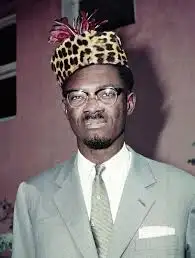
BRUSSELS – In a landmark judicial decision that has reverberated across the African continent, a Brussels court has formally ordered 93-year-old former diplomat Étienne Davignon to stand trial for his alleged role in the 1961 assassination of Patrice Lumumba, the first Prime Minister of the Democratic Republic of the Congo.
The ruling was delivered on Tuesday by the Pre-Trial Chamber of the Brussels Court of First Instance and it marks the first time a high-ranking Belgian official will face criminal prosecution for the cold blooded murder of the Congolese independence hero, an event that remains one of the most significant tragedies of the decolonization era.
Patrice Lumumba was executed by firing squad in January 1961 just months after leading his country to independence from Belgian colonial rule and his body was subsequently dissolved in acid to eliminate any trace of his existence.
While a 2002 Belgian parliamentary commission concluded that the state bore moral responsibility for the killing, no individual had ever been held legally accountable in a court of law.
Davignon was a young diplomat stationed in the Congo at the time of the assassination and is accused of complicity in the plot that led to Lumumba’s capture and execution.
The court’s decision to proceed with the trial follows years of relentless legal pressure from the Lumumba family and international human rights organizations who have long argued that the assassination constituted a war crime that is not subject to a statute of limitations.
The news has been met with widespread acclaim in Zimbabwe, where Pan-Africanist sentiment remains a vital cog of the national identity and state ideology.
Zimbabwean intellectuals and political figures have hailed the court’s decision as a long overdue victory for African sovereignty and a critical step toward dismantling the legacy of colonial impunity.
Dr Richard Mahomva a Zimbabwean academic said :
“This is a victory for the African story” as posted on his social media handle.
Social science specialist Maxwell Bhake described the ruling as a psychological and legal breakthrough for the continent.
He stated that this is not merely a trial of an individual, but a trial of the entire colonial apparatus that sought to decapitate African leadership at its inception.
He said for too long, the architects of African leaders’ demise have lived in comfortable retirement while the continent continues to grapple with the instability they sowed and that this decision by the Belgian court signals that the ghost of Lumumba still haunts the conscience of Europe.
Echoing these sentiments, local Pan Africanist Zaza Sibanda characterized the development as a milestone in the global quest for restorative justice.
Zaza remarked that the assassination of Lumumba was a direct assault on the collective aspirations of the African people and that by bringing a former diplomat to the dock, Belgium is finally being forced to confront its dark history.
“This is a victory for Africa and the Global South, serving as a reminder that the passage of time does not erase the stain of state- sponsored murder,” said Zaza.
He urged that this momentum be used to demand accountability for all colonial era atrocities across the continent, ensuring that justice is neither delayed nor denied for the heroes of Africa’s liberation struggles.
As the legal proceedings move forward, the trial is expected to shed new light on the international involvement in the 1961 coup and subsequent execution.
For many across Africa, the sight of a Belgian official standing trial for Lumumba’s murder represents more than just a legal procedure but it is a symbolic restoration of dignity for a leader whose vision for a truly independent and united Africa continues to inspire generations.
“The Zimbabwean government must use state media apparatus and closely monitor the trial, viewing it as a litmus test for Europe’s commitment to genuine reconciliation with its former colonies and a necessary step in the ongoing decolonization of the global justice system, “said a political commentator.
