
By Staff Reporter
People’s Unity Party (PUP) leader Herbert Chamuka, also known as Hlupeko Msila, has intensified his push for Zimbabwe’s Inclusive Government Agenda (IGA), calling for unity between the ruling party and opposition political players in pursuit of national development.
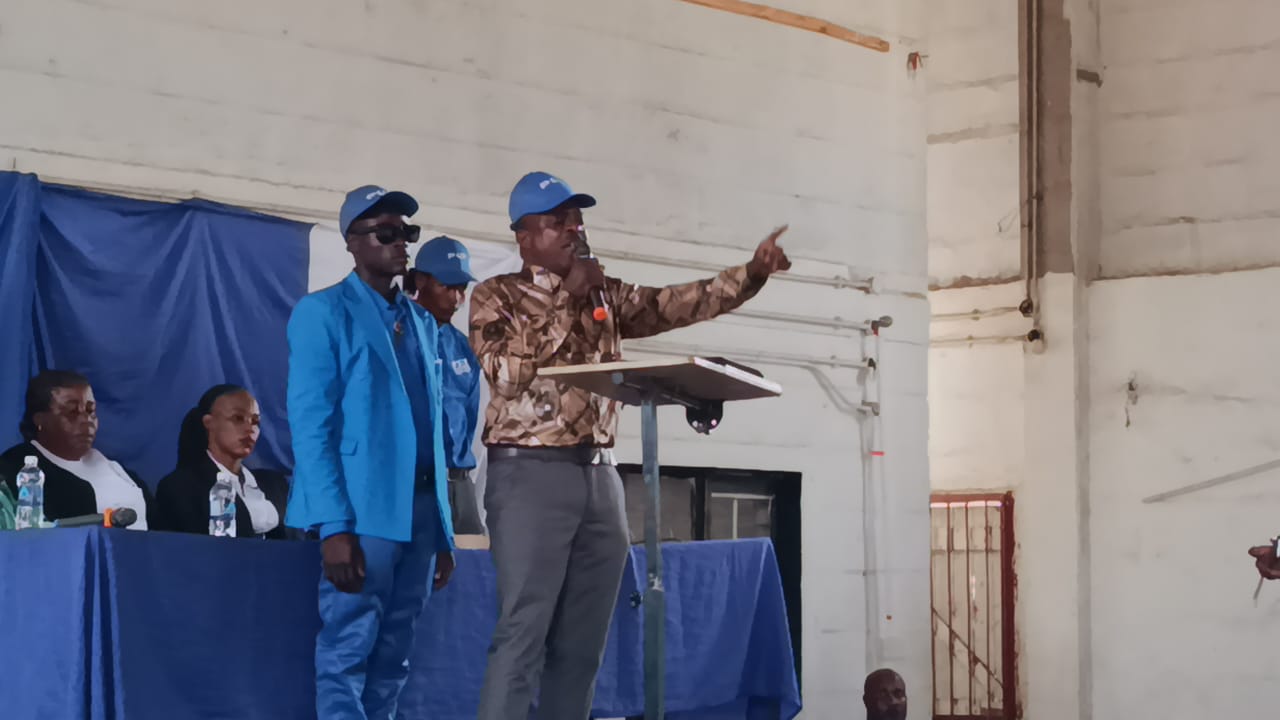
Addressing citizens in Gokwe on May 16, Chamuka said the country needed a new political approach centered on cooperation rather than confrontation, adding that his movement was now seeking engagement with other opposition leaders as the IGA campaign continues to spread across the country.
Speaking before party supporters and residents, Chamuka said the initiative was not aimed at removing the ruling government from power, but rather at creating a platform where all political actors can contribute to national decision-making processes.
“We are not pushing for conflict or division in this country.
“Our vision is to bring Zimbabweans together despite political differences. We believe opposition parties, churches, civic organizations and ordinary citizens must all participate in national development and governance,” Chamuka said.
He said the Inclusive Government Agenda supports Zimbabwe’s Vision 2030 program, the national development framework aimed at transforming the country into an upper-middle-income economy by the year 2030.
“Vision 2030 should not belong to one political party alone,” he said.
“It is a national vision which must include every Zimbabwean. Our role as opposition leaders is not to destroy the country but to contribute ideas and solutions that improve people’s lives.”
Under the proposed IGA framework, Chamuka said primary education should be made free for all Zimbabwean children, arguing that access to education remained a basic right that should not depend on family income.
“A child in rural Gokwe deserves the same educational opportunities as a child in Harare,” Chamuka said.
“Education at primary level must be free because education is the foundation of national development.”
He also proposed monthly financial support for senior citizens, saying elderly people who contributed to the country during their productive years deserved dignity and protection.
“Our elderly citizens cannot continue suffering after dedicating their lives to building this country,” he said.
“We want a system where senior citizens receive monthly support from the government so they can live decent lives.”
The PUP leader further said Zimbabwe’s economic and political challenges could only be solved through dialogue, inclusivity and collective leadership.
His remarks come at a time when discussions around national unity, governance reforms and Vision 2030 continue to dominate Zimbabwe’s political landscape.
In recent months, Chamuka has repeatedly called for broader political participation under the IGA framework, arguing that economic recovery requires cooperation between government and opposition parties.
The Inclusive Government Agenda has already been launched in several provinces including Harare, Midlands and Masvingo, with organisers saying the program seeks to unite political parties, civil society organizations, churches, youth groups and community leaders around national development issues.
During the Gokwe address, Chamuka indicated that consultations with opposition leaders would soon begin as part of efforts to broaden support for the initiative.
“We are now moving to engage other opposition leaders because this agenda is bigger than one political party,” he said.
“Zimbabwe needs unity of purpose. We may differ politically, but we all want a better economy, jobs for young people and a better future for our children.”
Chamuka also urged political leaders to avoid violence and intolerance, saying Zimbabwe’s future depended on peaceful engagement and constructive dialogue.
“This country belongs to all of us,” he said.
“There is no need for hatred. We can compete politically while still working together for the good of Zimbabwe.”
The IGA campaign has increasingly positioned itself as a platform advocating inclusive governance and national dialogue, with Chamuka insisting that opposition parties should not only criticize government policies but also participate in shaping solutions for the country’s economic and social challenges.
