
By Nigel Pfunde
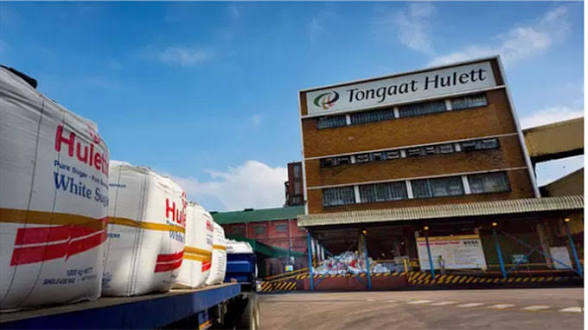
HARARE — Zimbabwe faces a potential shortage of refined white sugar as Tongaat Hulett Ltd., the country’s dominant sugar producer, grapples with financial distress at its South African parent company.
The risk threatens beverage makers, confectioners, bakers and retail supply. Industry players described it as a “perfect storm” of corporate insolvency, a failed multibillion-rand rescue deal and the impact of regional drought.
At the center is the collapse of a rescue plan for Tongaat Hulett Ltd. The South African company entered business rescue in 2022 after accounting irregularities wiped out about R12 billion in shareholder value.
A deal for the Vision Consortium to buy Tongaat’s South African operations and subsidiaries in Zimbabwe, Mozambique and Botswana lapsed after Vision and the state-owned Industrial Development Corporation failed to finalize terms on a R2.3 billion funding facility. Vision later issued Tongaat with a demand for R11.7 billion in debt.
“There is no longer a possibility of continuing to implement, and therefore achieve substantial implementation of, Tongaat’s approved business rescue plan,” business rescue practitioner Metise Albertyn said in court filings. Albertyn said the company had “no choice” but to apply for provisional liquidation because “the urgent need for short-term interim funding will not be met.”
Court extensions have kept mills running for now.
Tongaat’s Zimbabwe assets, Hippo Valley Estates and Triangle Ltd., have remained profitable. But analysts say they are still linked to the parent through refining capacity and financial systems.
“The developments in South Africa do not involve our Zimbabwe operations, which function as independent legal entities with separate management, finances, and operations,” Hippo Valley management said. “Triangle Ltd and Hippo Valley Estates remain financially robust, operationally sound, and fully committed to all contractual obligations.”
Industry players warn the operations are not fully insulated. A local miller who spoke on condition of anonymity said, “Tongaat’s corporate instability directly jeopardizes payments and processing capacity for thousands of small-scale out-grower farmers in Zimbabwe’s Lowveld region, risking a complete cessation of mill operations.”
An executive with the Zimbabwe Sugarcane Growers Association said, “Zimbabwe is still clawing its way back from severe, climate-fueled El Nino droughts that strained irrigation water allocations and lowered regional crop yields.”
The government has import surcharges in place to protect local sugar. A Harare-based trade consultant said, “while intended to boost local industry, this trade barrier means that if Tongaat’s local processing stalls, importing emergency white sugar to fill the deficit will be prohibitively expensive.”
A procurement head at a major Zimbabwean beverage company said, “unlike brown sugar, highly refined white sugar is a non-negotiable raw input for industrial food processing, meaning a prolonged disruption would trigger immediate production halts in the manufacturing sector.”
A regional commodities analyst said, “unless a politically viable, well-funded investor steps in to decouple the cross-border African estates from the collapsing South African entity, Zimbabweans will soon face acute shortages and skyrocketing prices at the checkout counter.”
