
By Nigel Pfunde
“When you thought you had seen it all,” said a colleague last week. He had visited his sister’s house and asked for his mzukuru (nephew). “She’s gone for ‘Recents’,” the sister replied.
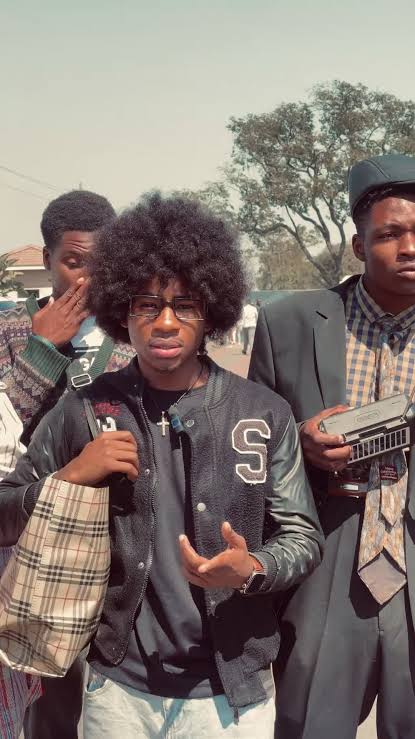
“Recents” is not a person. It is a place. Across Harare and in many urban centres, teenagers now flock to photo studios and boutiques styled as “Recents” which are spaces where they hire designer clothes, pose for curated photoshoots, and post the Kodak moments on Instagram, TikTok and WhatsApp statuses.
The goal is not the moment. It is the image.
The phenomenon exposes a deeper collision that is adolescence in the age of digital and social media. Teenage years have always been marked by identity searching, peer pressure and rebellion.
Long back, young adolescent boys would exchange clothes and bandanas as they went to floss at clubs Circus, Archipelago, Sarahs (later Wiggle then Synergy), Tube and Jobs etc.
Those in rural areas would borrow ‘black horse’ bicycles to ride to the growth point and show off to the girls. They would also look for mpfanha wembudzi – a herb that stimulated the fast growth of pubic hair, which was a sign of manhood from boyhood.
The game has changed.
The smartphone has added a 24-hour audience. Developmental psychologists call it the “imaginary audience” effect which is the belief that others are constantly watching and judging.
Social media makes that audience real. Likes, shares and comments become currency, like what cigarettes do in remand prison!
For many teens, self-worth is now quantified by engagement.
Yet the picture is not one-sided. Digital platforms have expanded learning, activism and entrepreneurship. Teens now run online thrift stores; makeup tutorials and coding clubs which are flourishing.
Mental health support groups on WhatsApp have helped teens in Mabvuku and Highfield access counselling.
“Social media is not inherently destructive,” said Tafadzwa Chikumba, a sociologist specialising in youth and digital culture. “It amplifies existing social inequalities and desires. The same teen hiring a dress for ‘Recents’ might be using TikTok to learn graphic design. The problem is not the platform. It is the lack of digital and financial literacy around it.”
But the risks are equally real. The Ministry of Health’s 2025 Youth Mental Health report flagged “social comparison” as a leading stressor – the gap between online portrayal and offline reality fueling anxiety, depression and low self-esteem. Police and school authorities note a pattern of teens stealing to fund their online presence in Glen Norah, Chitungwiza and Bulawayo. Girls especially face pressure to transact sex for gifts, photoshoots or cash to buy into specific social brackets. Harmful trends have evolved from Vuzu Parties – teenage sex parties at homes to “Mjeje” –sex parties in kombis after police clampdowns.
“What we’re seeing is the commodification of identity,” said Thamsanga Mhlanga, sociologist and graduate from the University of Zimbabwe. “Adolescents are no longer just growing up. They are branding up. The digital economy has turned self-presentation into a product and ‘Recents’ is the factory floor.”
Dr Patience Gombedza, a Harare-based adolescent psychologist, says the digital shift has compressed identity formation. “Adolescents used to experiment with identity in private, with friends. Now they do it in public, permanently recorded. The pressure to perform a perfect life is constant.”
‘Recents’ studios have monetised that pressure. For US$5 to US$20, a teen can rent a dress, suit, or sneakers, get studio lighting and leave with 10 edited photos. The clothes go back on the rack. The photos go online to “fake the funk” and portray a world of make-believe wealth, travel and lifestyle.
It is performance, not reality. But the performance has real consequences. Teachers report that students are more invested in content creation than classwork, with ‘Recent’ photoshoots scheduled during school hours.
“Social media is a knife,” said Tinashe Gumbo (17) who runs a photography page.
“It can cut you or cut your path. I started at ‘Recents’ as a client. Now I shoot for them and pay my school fees.”
The evolution of social media has outpaced parenting, schooling and policy. Banning phones is not the answer. Digital literacy is. The Ministry of ICT has piloted digital wellness programmes in several schools, teaching teens about online image, privacy and financial scams. Churches and community groups in Mbare are running “Reality Check” sessions for parents.
Adolescence has always been confusing. Social media did not invent insecurity or peer pressure. But it amplified them, gave them a marketplace and attached a price tag. As one parent put it after hearing about ‘Recents’: “We used to worry about where they went at night. Now we have to worry about where they go online.”
The photos are fake. The pressure is real. And society is still loading its response.
