
By Nigel Pfunde
Harare — THE ambitious Watervlei Burial Park project along Seke Road has reached a significant milestone, with developers injecting US$3.8 million into the first phase of an initiative designed to provide a dignified final resting place for liberation war heroes.
The development sits on 80 hectares and iscearmarked to accommodate approximately 8 000 liberation war heroes whose remains are currently in unmarked graves in neighbouring countries.
Beyond its commemorative significance, the project is set to provide critical burial capacity for the capital as existing facilities, including the Provincial Heroes Acre at Warren Hills, face mounting pressure. The development is also expected to create over 200 jobs for local residents.
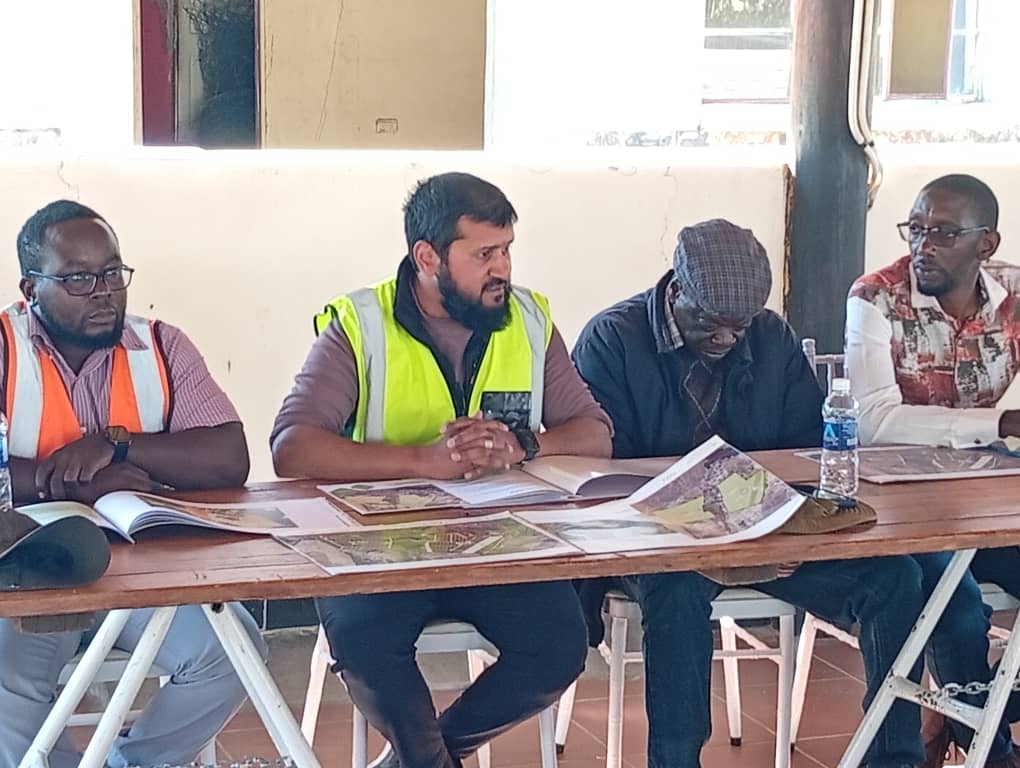
Project manager Ismail Nanabawa, speaking at a press briefing on Thursday, confirmed that construction commenced in late 2024 and the site is on track to become operational by the final quarter of this year.
“In terms of total investment for the whole Watervlei Burial Park, we’re looking at investing US$3.8 million for the first phase of the project,” said Nanabawa. “This includes everything, bearing in mind we are putting a massive fence around the entire site. We have a major plant as part of rehabilitating the ground to plant close to 1000 trees.”
Nanabawa said that significant financial and logistical resources were required to rehabilitate the site, which had suffered extensive environmental damage due to illegal dumping and sand poaching.
“What has taken us, I can’t put it in words exactly how much time and effort has gone into rehabilitating the sites. When I say illegal dumping, people often think it’s just a smoker, but some of these are higher than this gazebo. So that’s a significant cost for us,” he explained.
Extensive earthworks were necessary over the past two years to fill pits, introduce quality soil, and ensure proper compaction.
“The main portion of the works or the highest cost will be the roads. We have an irrigation system we have to build. We have the herse ways we have to build,” Nanabawa added.
“We also have the traffic circle, or depending on the Ministry of Transport’s final approval, whether we are building access lanes or traffic lights, we have a significant development to do on the intersection as well.”
The project has secured the endorsement of the Zimbabwe National Liberation War Veterans Association (ZNLWVA) and the Memories of Zimbabwe Armed Struggle Trust (MOZAST).
In recognition of the sacrifices made for the country’s Independence, developers have donated 8,000 burial plots to MOZAST specifically for the repatriation of veterans.
The initiative aligns with wider national efforts to address the status of those lost during the struggle.
“An estimated 30,000 Zimbabwean war veterans are buried outside of the country in unmarked graves and even mass graves, some 45 years after the country’s liberation struggle,” Nanabawa said.
Meanwhile, the recently tabled Reburial and Memorialisation Bill, once passed, will enable the Government to formally collaborate with the War Veterans, churches, traditional leaders and families in a structured and well-resourced reburial programme.
Nanabawa further said o preserve history, the development will feature a War Veterans Archway at the entrance of the dedicated section and a Museum within the Remembrance Village to be curated by MOZAST.
This US$3.8 million investment marks a pivotal step in the national mandate to honour the country’s liberation icons, ensuring that those who fought for Zimbabwe’s sovereignty receive the formal recognition and dignified burial they have long been denied.
