

By Nigel Pfunde
MAZOWE — Government has laid plans to set up a School of Excellence in Tourism as part of its human capacity building drive and efforts to strengthen service standards by industry practitioners in line with ever-changing global trends, Express Mail Zim can report.
This strategic initiative is expected to reshape the tourism and hospitality sector of Zimbabwe, alive to the fact that the bedrock of any thriving tourist destination lies not just in its natural attractions, but in the caliber of its human capital.
In a country blessed with iconic landmarks like Victoria Falls and rich cultural heritage, the establishment of this institution holds critical importance of nurturing a workforce that can deliver world-class service, thereby enhancing the nation’s competitive edge on the global stage.
The School of Excellence is envisioned as a pivotal engine for national economic development, as tourism remains a key pillar for foreign currency earnings and job creation and its success is intrinsically linked to the proficiency and adaptability of its practitioners.

Law Number 1: Deputy Minister of Tourism and Hospitality Hon. Tongai Mnangagwa pays undivided attention as his boss Hon Rwodzi delivers strategy issues to delegates in Mazowe on Monday
Suffice to say it made a 10 percent contribution to the national Gross Domestic Product according to latest statistics.
This was revealed by the Minister of Tourism and Hospitality Industry, Barbara Rwodzi in her engagement with delegates at the National Tourism Strategy Stakeholders’ Consultation workshop (2026-2030) held in Mazowe on Monday.
“We want to catch up with changing trends and improve excellence in all tourism and hospitality sectors. As such we will have a school of excellence in tourism to keep practitioners abreast with changing trends and up the quality of service to push tourism growth,” said Rwodzi.
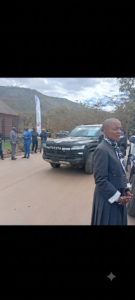
Tourism Minister Barbara Rwodzi speaks to journalists outside Baradzanwa Culture Centre Conference Room on Monday
The emphasis on continuous learning is further amplified through mandatory refresher courses for existing practitioners, a policy that acknowledges the dynamic nature of the industry where guest expectations and technological advancements evolve rapidly.
These courses are not merely an academic formality but a strategic tool to ensure that the workforce remains relevant, skilled and capable of exceeding the sophisticated demands of modern travelers from digital check-ins to personalized experiential offerings.
“We will have compulsory refresher courses because trends are changing. We can’t have a student as a manager at a hospitality institution where he or she might fail to cope with pressure, but with human capital development we will have wholesome quality service that lures tourists,”* she said.
Linking training to foreign policy, Minister Rwodzi said tourism must be used as a tool of “soft diplomacy” to rebrand Zimbabwe globally.
“Tourism is soft diplomacy. When a tourist comes here and gets excellent service, they go back and tell 10 people. That is how we market Brand Zimbabwe,”* Rwodzi told delegates.
“We need to sell our story. Zimbabwe is open for business and we must use our culture, our people and our hospitality to win friends for the country.”
By institutionalizing lifelong learning, the country aims to eradicate service complacency and foster a culture of excellence that can significantly boost tourist arrivals, repeat visits and positive word-of-mouth, ultimately creating a virtuous cycle of industry growth and economic prosperity.
Beyond the immediate focus on education and training, Minister Rwodzi’s address at the Mazowe workshop painted a comprehensive picture of the government’s holistic vision for the sector, touching on critical areas such as marketing, product diversification and stakeholder collaboration in a “whole of government and society” approach.
She emphasized the need for a robust and aggressive marketing strategy to reposition Destination Zimbabwe, highlighting that while the country is open for business, the narrative must be compelling and consistent to attract both regional and international markets.
“We need to aggressively market our destination and ensure that our products are competitive,”Rwodzi said.
She also zeroed in on the necessity of showcasing the country’s unique selling points, from its pristine wildlife and stunning landscapes to its vibrant culture and warm hospitality.
Furthermore, she stressed the importance of product diversification to extend the tourist season and spread economic benefits across all provinces, encouraging the development of niche tourism products such as cultural tourism, heritage trails, and MICE (Meetings, Incentives, Conference, and Exhibitions) tourism.
In that regard, this year’s Sanganayi/Hlanganani World Expo will be held in Masvingo as part of ‘devolution’ in tourism destinations.
“The world usually only talks about Victoria Falls but Zimbabwe has lots of wonders like the Great Zimbabwe and so on and this year we moved Sanganai/Hlanganani to Masvingo.
“Its gonna (sic) be a big and unique event where we will host a tertiary institutions sports tournament a week before and the winners will neet the national teams in all sporting disciplines.This is inline with boosting our sports tourism,” she told delegates.
Rwodzi also reiterated government’s commitment to creating an enabling environment for investment, streamlining regulatory frameworks and fostering public-private partnerships to unlock the full potential of the sector.
She highlighted that the success of the strategy hinges on a whole-of-government approach, where all ministries and departments work in synergy to address infrastructure deficits, improve ease of doing business and ensure the safety and security of tourists.
“Tourism is a multi-sectoral industry; we need collaboration from all stakeholders, including local communities, to realize our vision,” she said.
She called for collective ownership of the strategy to ensure its successful implementation and the realization of a US$5 billion tourism economy by 2030.
The deliberations at Mazowe thus painted a forward looking roadmap, with the School of Excellence, mandatory refresher courses
and soft diplomacy serving as the foundational pillars for a transformed, resilient and prosperous tourism industry that can significantly contribute to Zimbabwe’s wide socio-economic development goals under NDS2 as envisaged by President Mnangagwa ‘s vision.
