
Op-ed by Nigel Pfunde
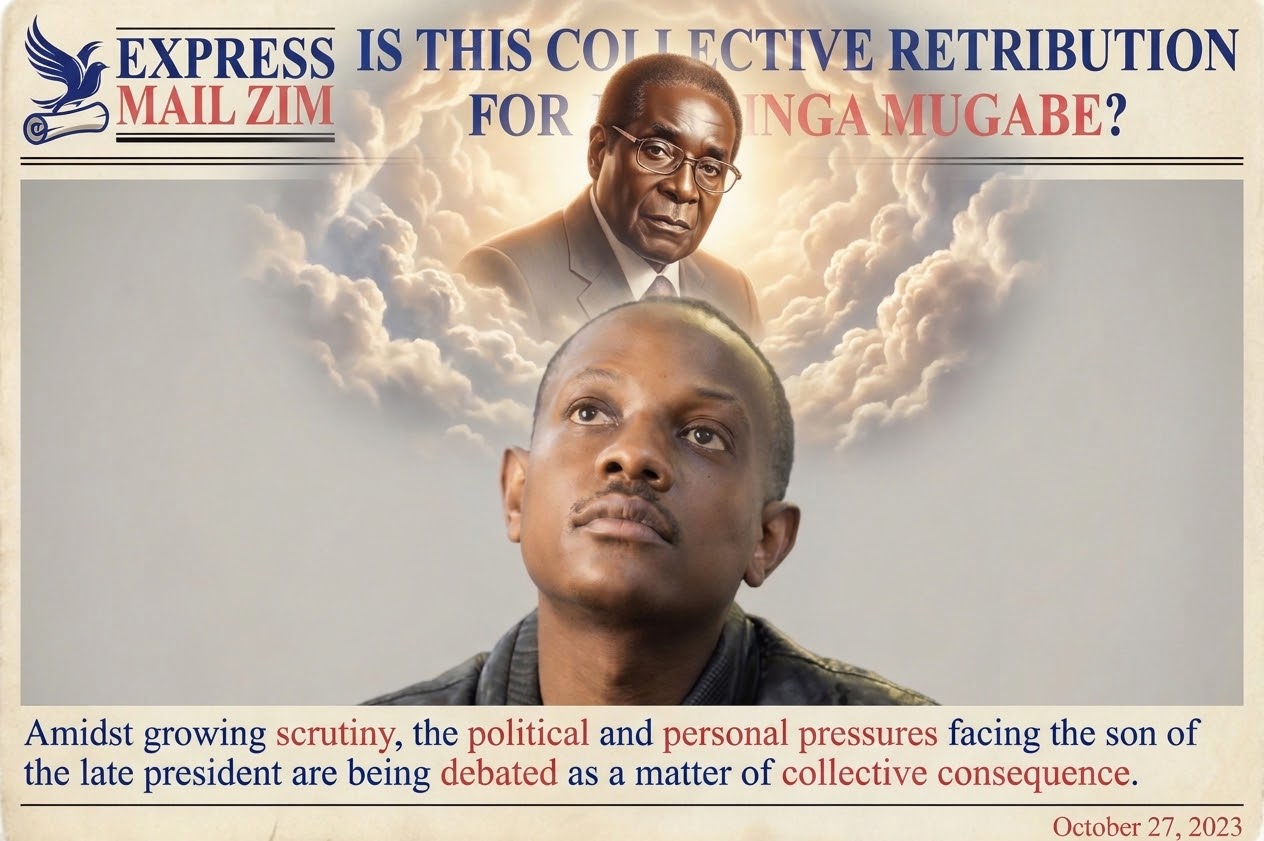
For ordinary citizens walking the streets of Harare, carrying a famous last name can often feel like walking with a permanent target on your back, and few understand this reality quite like Bellarmine Chatunga Mugabe.

Every time his name floods the news headlines, a familiar chorus erupts across social media and public spaces: Why is it always Chatunga?
The latest storm erupted following his arrest alongside four other men, stemming from a high-stakes confrontation with a Zimbabwe Anti-Corruption Commission (ZACC) investigator. The incident unfolded during a ZACC operation targeting luxury vehicles—specifically a Lamborghini Urus and a Mercedes-Benz GLE—suspected of being smuggled into the country from South Africa. Yet, beneath the sensationalized media framing and the rapid rush to public judgment, a more complex, uncomfortable reality emerges from the ground.
To understand Chatunga’s predicament, observers note that one must look beyond the immediate police blotter. As the youngest son of Zimbabwe’s late former president, Robert Mugabe, Chatunga lives under a relentless microscope. In political landscapes where historical dynasties cast long shadows, the families left behind frequently become lightning rods for lingering public frustrations and unresolved political grievances.
While public narratives paint every event involving him as a premeditated scandal, insiders and sources familiar with the actual ground dynamics of the Newlands lodge incident tell a vastly different human story. According to those aware of the specific micro-circumstances of the confrontation, the situation was heavily fueled by sudden friction and intense operational provocation on the ground. When emotions flare unexpectedly in private spaces, individuals naturally react to stress. However, because Chatunga is the person involved, an ordinary dispute or a tense misunderstanding is immediately blown out of proportion to fit a pre-existing narrative of entitlement.
Legal experts and independent analysts point out that collective retribution remains a dangerous undercurrent in public life, operating on the unwritten rule that the historical controversies of a parent must be endlessly paid for by his children. When a regular citizen gets caught in a heated dispute or a vehicle investigation, it is typically handled through standard administrative or civil channels. When Chatunga’s name is attached, it transforms instantly into front-page fuel designed to feed public prejudice.
This is not to argue that individuals are above the law, or that judicial processes should be bypassed. Fairness dictates that any allegations must be thoroughly tested through a transparent legal system, as an arrest is never a substitute for a conviction.
As this latest case moves through the courts, the core question facing ordinary readers is not merely whether a high-profile citizen broke the rules, but whether society is judging Chatunga Mugabe for his individual actions, or simply projecting the ghosts of yesterday onto his shoulders.
