
Opinion by Brilliant Pongo
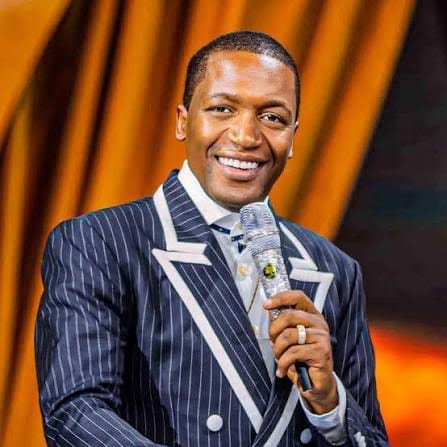
Zimbabwean police have confirmed the arrest of Uebert Angel. The account from the Hippodrome in Harare adds a striking detail. Officers reportedly walked in while he was preaching, handcuffed him and took him away in the back of an open pickup. If that account is accurate, why did police choose to act in the middle of a church service?
National police spokesperson Commissioner Paul Nyathi told The Herald that Angel was arrested on Sunday, 22 November, in connection with allegations of indecent assault and sodomy. Whether formal charges have been filed remains unclear. The reported interruption of the sermon and the details of how Angel was taken away have yet to be independently verified.
The manner of the arrest matters because the state owes the public an explanation for how it uses its power, especially when officers act in full view of a congregation. It also matters because the scene can consume the story. Within hours, people can be arguing over who won a round in ZANU-PF while the person who came forward with a serious allegation disappears from the discussion.
How a sermon became a political statement
Earlier this month, Angel urged critics of Vice President Constantino Chiwenga to stop what he described as attacks on him. Former Norton MP Temba Mliswa publicly rebuked him. Angel later declared his loyalty to President Emmerson Mnangagwa. In the middle of a succession debate in ZANU-PF, the words of a preacher who also serves as a presidential envoy were being scrutinised for what they might reveal about where he stood.
That sequence helps explain why Sunday’s arrest is being read politically. A presidential envoy reportedly led out of his own church in handcuffs is an image that lends itself to a show-of-power interpretation. The sequence alone leaves two central questions unanswered. Who decided to make the arrest there, and what dictated the timing?
What the warning from Nigeria sounded like
Angel left Zimbabwe amid conflicting accounts of an alleged attempt on his life. He appeared in Nigeria, where his spiritual mentor, Pastor Chris Oyakhilome, warned during a church service that anyone who went after Angel would face divine punishment. Angel reportedly stopped at his home in Lincolnshire, England, before returning to Zimbabwe.
An influential pastor may intend such words as reassurance to a friend. Someone considering coming forward with a complaint could hear them as a warning about what might happen if they speak. That is reason enough to scrutinise the remarks. The claim that Oyakhilome was addressing this particular complainant remains unsubstantiated.
The questions that outlast the spectacle
The police should say whether officers interrupted the service and, if they did, why they chose that moment. Anyone alleging a political setup should say what evidence supports that claim. A faction could find the arrest politically useful regardless of why police acted. The complaint still has to be investigated on its merits.
Angel is entitled to the presumption of innocence. The complainant deserves to be heard without intimidation. Those obligations will matter long after people stop talking about the pickup.
