
By Kudakwashe Matizanadzo
HARARE – It started with a handshake at the airport. It will end with the world looking at Zimbabwe differently.
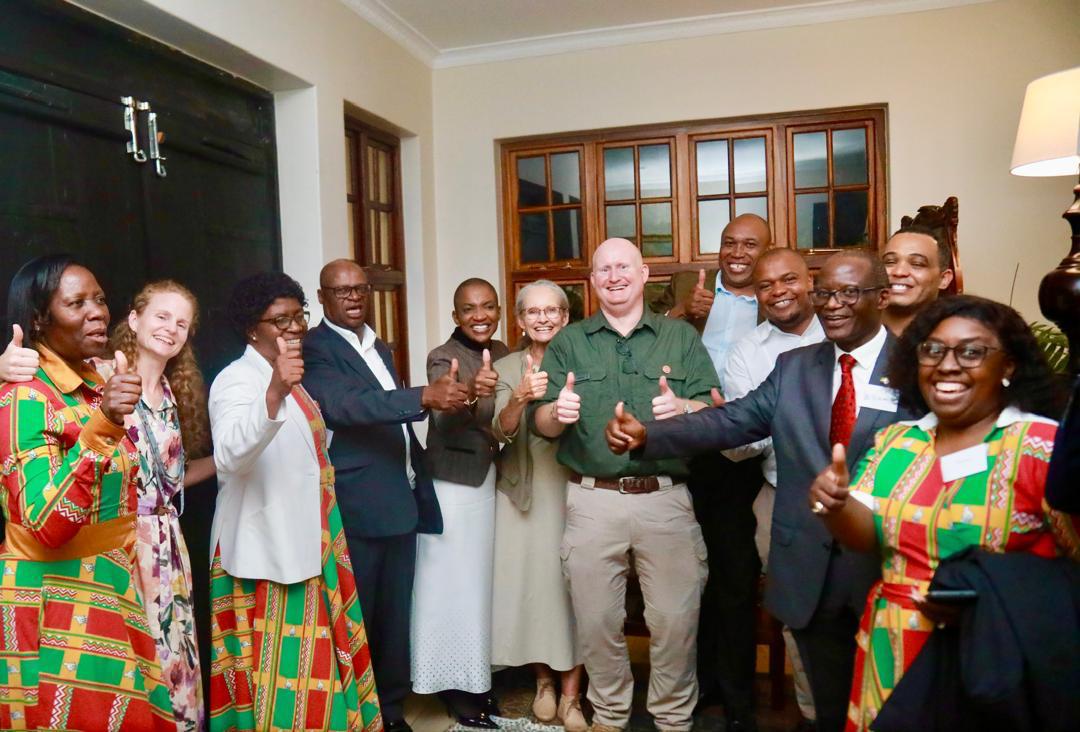
When Tourism and Hospitality Industry Minister Hon Barbara Rwodzi stepped onto the tarmac at Robert Gabriel Mugabe International Airport to warmly welcome Amanda de la Garza, president of the International Committee for Museums and Collections of Modern Art (CIMAM), it was not just protocol.
It was a statement of intent. Zimbabwe is no longer content to be known only for Victoria Falls and wildlife. It wants to be known for what its hands have made; its stone, its sound and its stories.
From 20 to 22 November 2026, Harare hopes to prove exactly that.
For the first time in its history CIMAM, the global network of the world’s leading modern art museums is holding its annual conference in Africa and it chose Harare.
The 58th Annual Conference will bring museum leaders, curators, collectors and cultural professionals from across the globe to Zimbabwe’s capital for three days of dialogue, exhibitions and exchange.
For the Ministry of Tourism and Hospitality Industry, this is not an accident. It is strategy.
“Creative arts and cultural heritage are an integral part of Zimbabwe’s tourism offering. Hosting this conference is an exciting milestone that speaks volumes about destination Zimbabwe’s appeal to niche markets interested in arts, culture and luxury experiences” said Rwodzi.
In other words; Zimbabwe is moving beyond the safari brochure. It is positioning itself for the traveller who wants luxury with meaning – a traveller who will fly in for an exhibition, stay for a sculpture and buy from the artist who carved it.
Flanked by Dr Biggie Samwanda, Director of Arts in the Ministry of Sport, Recreation, Arts and Culture and Raphael Chikukwa, the Chief Executive Officer of the National Gallery of Zimbabwe, Minister Rwodzi made the point clear at the airport: this is about people, not just paintings.
The conference provides a platform to showcase Zimbabwe’s cultural heritage from Great Zimbabwe, a UNESCO World Heritage Site built without mortar, to the living heritage of mbira, jerusarema and amabhiza.
It elevates local artistic expressions such as the world famous shona sculpture movement from Tengenenge and Chapungu, contemporary painters, photographers, fashion designers and digital artists who are redefining what it means to be Zimbabwean.
It adds value to local products so that a basket woven in Binga, a beadwork piece from Masvingo, or a sculpture chiselled in Guruve does not leave the country as a cheap souvenir, but as a valued work of art with a price that respects its maker.
This is cultural tourism with an economic pulse.
What makes this moment different is that tourism is not doing it alone.
Through a whole of government approach, three ministries are pulling in the same direction.
Tourism and Hospitality Industry packaging culture as an experience visitors will pay for, Sport, Recreation, Arts and Culture ministry protecting, promoting and professionalising the creators and Home Affairs and Cultural Heritage ministry safeguarding the heritage that makes it all authentic.
Together, they are harnessing Zimbabwe’s cultural assets to enrich the tourism experience, enhance the value of local products and ensure the benefits of cultural tourism extend to its people not just to galleries in London, Paris or New York.
Global tourism is shifting. Travellers are tired of the same beach, the same hotel or the same photo.
They want what cannot be copied. They want heritage. They want a story.
Zimbabwe has that in abundance. It has the oldest rock art in southern Africa, a sculpture tradition that Picasso admired and a music tradition that birthed genres across the continent.
What it has lacked is a global stage to tell that story on its own terms and CIMAM provides that stage.
When Amanda de la Garza and her delegation walk through the National Gallery of Zimbabwe, visit community studios and meet artists in Harare, they will not just see art; they will see a country that is using culture as a development strategy – where a museum visit becomes a job for a guide, a sale for an artist, a night booked in a lodge and pride for a community.
That is the foothold Minister Rwodzi is building. Zimbabwe not as a guest at the global cultural table, but as a host. The world is coming to see what Zimbabwe has to offer.
