
By Nigel Pfunde
JOHANNESBURG — A London-bound British Airways Airbus A380 was forced to perform a dramatic U-turn over Central Africa and fly nearly seven hours back to its point of origin after its weather radar system failed mid-flight.
Flight BA54, operating the long-haul route from O.R. Tambo International Airport in Johannesburg to London Heathrow, departed on August 8 after initial ground delays.
The superjumbo, carrying hundreds of passengers, climbed to a cruising altitude of 34 000 feet and proceeded north over Botswana and Zambia before reaching the airspace over the Democratic Republic of Congo.
It was over Central Africa, a region infamous for severe convective storms and turbulent equatorial weather system that the flight crew detected an unresolvable issue with the aircraft’s weather radar.
After both primary and backup radar systems failed to clear persistent “clutter” on the screens, the pilots deemed it unsafe to continue flying through severe weather zones in complete darkness without operational radar.
Faced with a critical “no-go” technical scenario, the crew aborted the crossing and turned the double-decker aircraft back toward Johannesburg. Because the jetliner was fully fueled for an 11-hour transcontinental flight, it was forced to spend approximately two hours in a holding pattern north of Johannesburg burning off excess fuel to safely reach its maximum landing weight. The A380 eventually landed safely back at O.R. Tambo almost seven hours after its initial takeoff.
Following maintenance checks and swift repairs to the radar system, the aircraft was cleared for flight and departed successfully for London Heathrow later that evening without further incident.
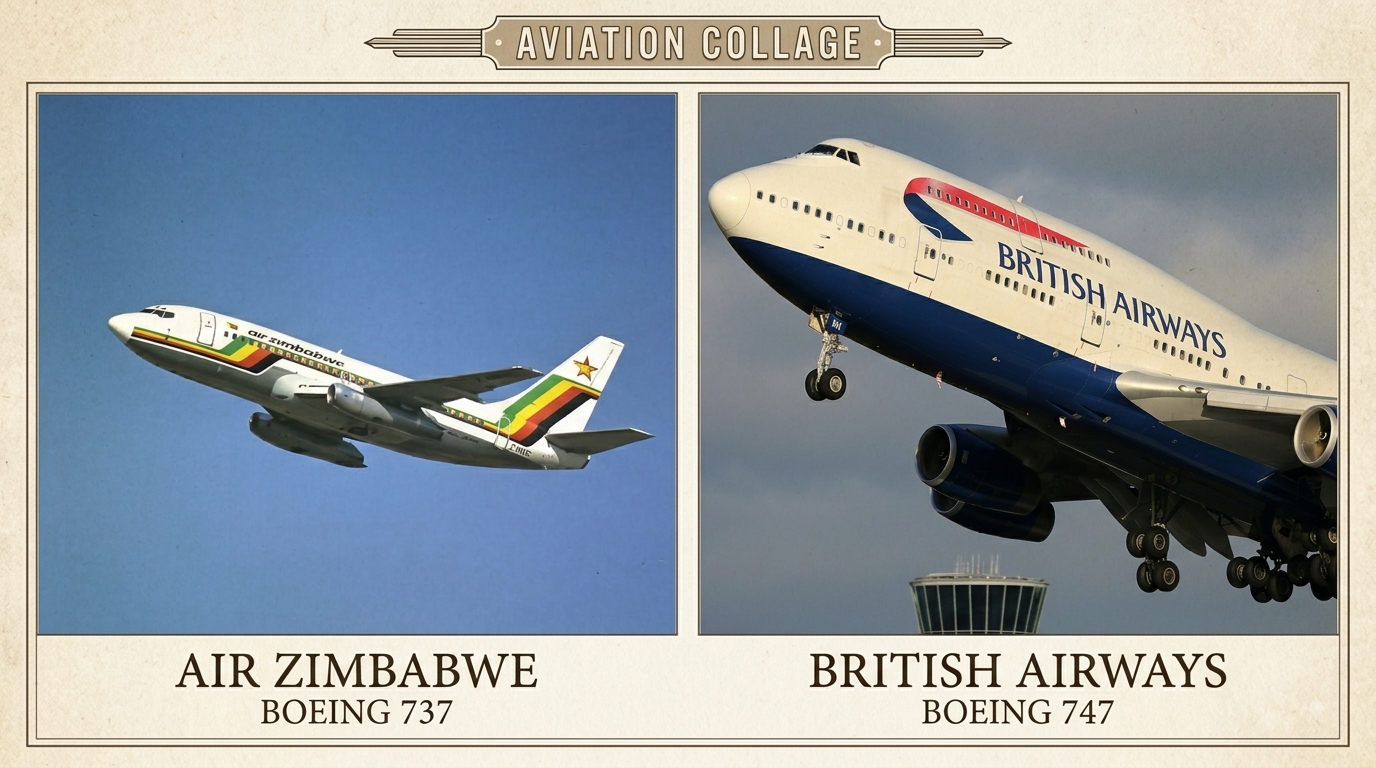
Air Zimbabwe was vindicated and aviation analysts opined that technical hitches, air turn backs, and mid-flight diversions are standard precautionary safety procedures routinely practiced by airlines worldwide to prioritize passenger safety over schedule adherence.
Analysts pointed out that national carriers in developing nations, such as Air Zimbabwe, have historically faced harsh public criticism and severe castigation whenever technical issues or precautionary turn backs occurred.
However, experts said that this high-profile incident involving British Airways, one of the world’s leading premium carriers operating a state-of-the-art superjumbo vindicates Air Zimbabwe. It shows that complex mechanical and electronic faults can affect any airline regardless of size, budget or reputation, and that safety-first decisions to return to base remain the universal standard across the global aviation industry.
