
By Nigel Pfunde
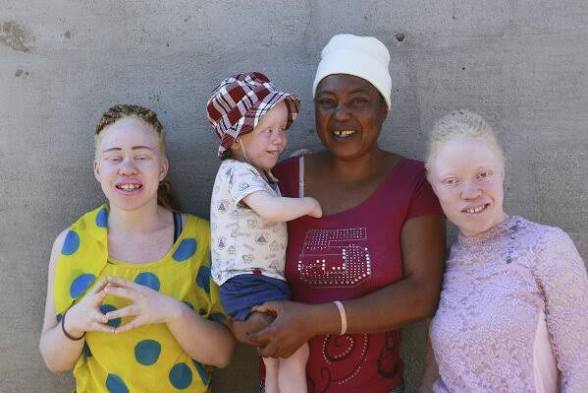
Harare– As Zimbabwe’s economic hardships deepen, local people living with albinism face a growing and painful reality where they can no longer afford the basic skin lotions, sunscreens, and specialized creams essential for their survival, health advocates have warned.
For persons with albinism, lack of access to high SPF lotions is not a cosmetic issue but a life threatening one.
Without proper protection, prolonged exposure to the sun leads to severe burns, skin damage and in many cases, deadly skin cancers.
Yet with the biting economic downturn pushing prices of basic goods beyond reach, these necessities have become luxuries.
“A bottle of sunscreen that cost $5 last year is now $18 or more,” said Tinashe Chikoti, a member of the Zimbabwe Albino Association.
“Many of fellow members now go days, sometimes weeks, without applying any lotion. They stay indoors during peak sunlight hours, but for those who work in the fields or sell wares at markets, there is no escape.”
Compounding the crisis is the unavailability of government subsidized lotions promised through the social welfare system.
While the Ministry of Public Service, Labour and Social Welfare has in the past distributed sunscreen donations from international partners, recipients say supplies are erratic and often expire before reaching remote areas.
“I received a tube of sunscreen once last year. Since then, nothing,” said 34-year-old Miriam Chikwanha, a mother of three living with albinism in Epworth.
“I now use homemade mixtures of shea butter and water but it offers little protection. My skin peels and burns constantly. I fear for my life, but what can I do?
” I cannot afford the clinic, let alone lotion.”
Health experts warn that the consequences are already visible. At public hospitals in Harare and Bulawayo, dermatologists report an uptake in albinism patients presenting with actinic keratosis precancerous lesions an advanced skin ulcer and squamous cell carcinoma.
“Without sun protection, the risk of skin cancer for someone with albinism is almost 1,000 times higher than for the general population,” said Dr. Patience Mwazha , a dermatologist at a local private hospital.
“We are seeing patients in their twenties with late stage skin cancers that could have been prevented with regular use of $10 sunscreen. This is a quiet public health emergency.”
Beyond lotions, the economic squeeze has also cut access to wide brimmed hats, UV-protective clothing and low-vision aids exacerbating educational and employment barriers.
Many children with albinism have dropped out of school because they cannot afford sunglasses to read blackboards, while adults struggle to secure outdoor jobs without proper protective gear.
Civil society groups are calling on the government to classify sunscreen and specialized lotions for persons with albinism as essential medicines exempt from import duties and VAT. They also urge the reinstatement of a monthly distribution program funded through the AIDS Levy or the Social Protection budget.
“This is not about beauty. It is a matter of life and death,” said Moyo. “We need action not promises before we bury another community member whose only crime was being born with albinism in a country where even the sun is unforgiving.”
Efforts to reach the Ministry of Health and Child Care for comment were unsuccessful by the time of publication.
